
If you've started a fitness program before and stopped because it wasn't built for your actual schedule – this is for you.
Your schedule kills most fitness programs. This one survives yours.
1-on-1 coaching for executives, founders, and senior professionals who need a body that keeps pace with their career – without a gym, a fixed schedule, or 90 minutes they don't have.
Max, CEO, entrepreneur, 4 kids – a friend I trained with every Sunday for eight months: 25 meters in January. A 4.2km open-water lake crossing by August.
Your body is your most leveraged
business asset.
Most executives treat it like a liability.
A founder who operates at 70% cognitive capacity after 3pm is making worse decisions in exactly the hours when deals close and the team is watching. That is not a wellness issue. It is a performance issue with a measurable cost. A cardiac event at 55 does not just cost your health. It costs the company you spent twenty years building. Nobody in your organisation will tell you that.
You are not the problem.
The programs were.
Every failed start you've blamed yourself for. Every good intention that collapsed under a Wednesday that went sideways. None of that was discipline.
Most fitness programs were designed for someone with a fixed location, a fixed schedule, and ninety consistent minutes three times a week. That is not a description of your life.
It was a program that couldn't survive the moment your Tuesday meeting ran over. What you've lacked is a method that survives your actual life.
You have 20 to 30 minutes, some mornings. A hotel room in Frankfurt, a garden in Munich, a stretch of pavement outside the office. That is not a constraint. That is enough. The question is whether your program is built to work with it, or against it.
The thing that is actually costing you is not visible on a balance sheet. It shows up as the decision you made at 4pm that you would not have made at 9am. As the meeting you ran poorly because you had not slept properly in six days. As the opportunity you did not pursue because you did not have the energy to think clearly about it.
A founder who suffers a cardiac event at 55 does not just lose their health. They lose the company they spent twenty years building. Physical neglect is a succession risk. Nobody in your organisation will tell you that. A body that starts compounding in the wrong direction at 40 does not reverse cheaply at 55.
"Your body is the vehicle your career, your family, and your attention ride in. Everything else you invest in eventually depends on whether that vehicle still runs."
Nils Enders-Brenner — HarteiIf that description is accurate enough — the call is 30 minutes, free, and useful regardless of outcome.
Book the discovery callThe advice you've been following is why you're not seeing results.
These are not opinions. They are mechanisms. Understanding them is the difference between a program that works and one that feels like it should work.
The cardio trap
Cardio burns calories. It also makes you significantly hungrier. For most people, the hunger wins.
The standard prescription is run more, eat less. The body's response to extended cardio is a measurable appetite spike – you burn 400 calories, eat 600 extra, gain weight and blame your discipline. This is not a willpower failure. It is a predictable physiological response to the wrong stimulus.
Strength training and bodyweight progressions do not trigger the same hunger response. They build muscle. Muscle burns calories at rest. The compound effect runs in the right direction.
This is the mechanism behind the "devil's circle" – the more cardio you do to lose weight, the hungrier you get, the more you eat, the less you lose. Breaking it requires different exercise, not more willpower.
The scale lie
You want to lose 10 kg. You will likely lose 5–7 kg. That is still a transformation.
Train correctly and you lose body fat while building muscle. Muscle weighs more than fat by volume. Expecting 10 kg on the scale and seeing 6 kg leads people to believe they failed. They didn't. They measured the wrong thing.
I track what changes in your body. Not just what the scale reports.
Stress eating
Stress causes snacking. Exercise reliably interrupts that cycle.
Binge eating and stress snacking share a root cause: the body looking for a way to process excess cortisol. Food works temporarily. Exercise works structurally.
The executives I work with are not overeating because they lack discipline. They are overeating because their bodies have no physical outlet for the pressure. The workout is the pressure release valve.
The time objection
"No time" is a program design problem, not a time problem.
Every person who has said they don't have time has real constraints that a standard program ignores. The solution is not to find more time. It is to build a program that runs in the time that already exists.
Rohn: "Success is nothing more than a few simple disciplines practiced daily." Four minutes done outperforms ninety minutes planned.
Three people. Same result in different forms: performing better where it actually matters.
Not before/after photos. Not scale numbers. The specific changes in energy, focus, and physical capacity that showed up in their working days – and their families' days.
Sourced from session transcripts, direct client messages, and recorded testimonials
"I feel better – more focused, more active with my kids."
Michael – Senior Developer, Texas. 47. Six weeks. No gym. 20-minute sessions.
Imagine what "more focused" is worth in your specific situation.
Max – Co-Founder & CEO, Constellr GmbH, 41, 4 kids.
Open water. August 2025.
Started January 2025. Could barely complete 25 meters in a pool. His real constraint: an entrepreneur with four children and, in his words, "very, very little time for sports." Eight months of a plan built around that constraint. A 2.5x measurable improvement in half a year.
"His special talent is not the techniques. He's a deep listener. The result speaks for itself."
Michael – Senior Developer, Texas USA. 47. Remote.
Squat mobility gain. 6 weeks.
240 lbs. Chronic foot pain. Joint stiffness across hips, shoulders, neck, and toes. No consistent movement for years. Six weeks of 20–25 minute sessions: 15% measured improvement in squat depth, pain scores falling, walking daily with his kids.
"The workouts don't feel like a big deal – but clearly do stuff. That's the sweet spot."
Client – Late 50s, Bavaria. In-person, outdoor.
Months to a measurably better life.
Outdoor training every session – strength, stretching, and endurance, adjusted each time to her actual form on that day. After three months: better sleep, less anxiety, a stronger back, and lower baseline stress.
"I can recommend this without reservation."
Session transcripts
Every coaching call logged. Progress tracked weekly, in writing. Not curated.
Form videos
Clients send workout footage. Progression from session one to week six is visible.
Real-time messages
WhatsApp and Signal check-ins, in writing. Not edited. Not summarised.
Video testimonial
Max recorded his results on camera. Unscripted. See the section below.
If you've seen enough – the call is free, takes 30 minutes, and is worth your time either way.
Book a free discovery callFriend's testimonial – Max, Co-Founder & CEO of constellr
25 meters in January. 2.5 kilometers of open water by August.
Max is the co-founder of constellr – a European space company with more than €75 million in funding. Not a client. A friend. We trained every Sunday at 7am, winter included. The plan was built around his actual week as a CEO and father of four – never more than his real schedule could give.
He recorded this testimonial himself. A co-founder of a high-eight-figure company has nothing to gain endorsing a fitness coach publicly. He did it because he believes other people carrying that level of responsibility should know what becomes possible when the plan fits their actual life.
What this video demonstrates
Deep listening before planning. A goal calibrated to the client's actual life. A result that came from consistency – not brutal intensity.
Why the sport doesn't matter
The constraints were the same: no time, family commitments, a changing schedule. The approach was identical: understand the person, build for their real life, track progress in specifics.
Simple enough to survive the Tuesday when everything went wrong.
That is the only standard that matters for someone with your schedule. Every plan I build is tested against it. If it can't survive a bad week intact, we simplify until it can.
Bi-weekly Zoom calls – live captions, transcript, shared whiteboard
Two 1-on-1 calls per month. Zoom's live captions and session transcript capture every word verbatim. The whiteboard runs alongside. You leave every session with two complete written records. Most coaching calls produce zero.
Written, visual instructions survive a 5am Wednesday when your head is foggy and nobody's watching. A prospect told me unprompted: "It would definitely help to have a written visual thing to reference – I want to make sure I understood everything accurately."
Direct messaging between every session
WhatsApp, Signal, or iMessage – whatever you already use. Text when something feels off. Send a workout video; get form feedback the same day. No ticket system. No waiting a week for the next call.
The moment between "I'm not sure about this" and "I'll just skip it" is where most programs die. Real-time access removes that moment.
Outdoor-first. Adapts to any location.
The default is outside – forest, park, pavement, garden, wherever you are. Travel or bad weather? The same workout adapts to any floor space. No machines means no location dependency. A hotel room and 20 minutes is enough.
Sunlight, uneven ground, and temperature variation produce physiological adaptations you will never get under artificial light and climate control. The forest is not a lifestyle choice. It is a better stimulus.
Bodyweight progressions – no machine dependency
The core of every program is your body. Kettlebells, gymnastic rings, a medicine ball – all usable if your goals align. What we never use is a gym machine, because a machine ties you to a building.
A movement you can do anywhere becomes a habit. A movement that requires a specific address becomes a variable – and variables disappear under pressure.
Also included
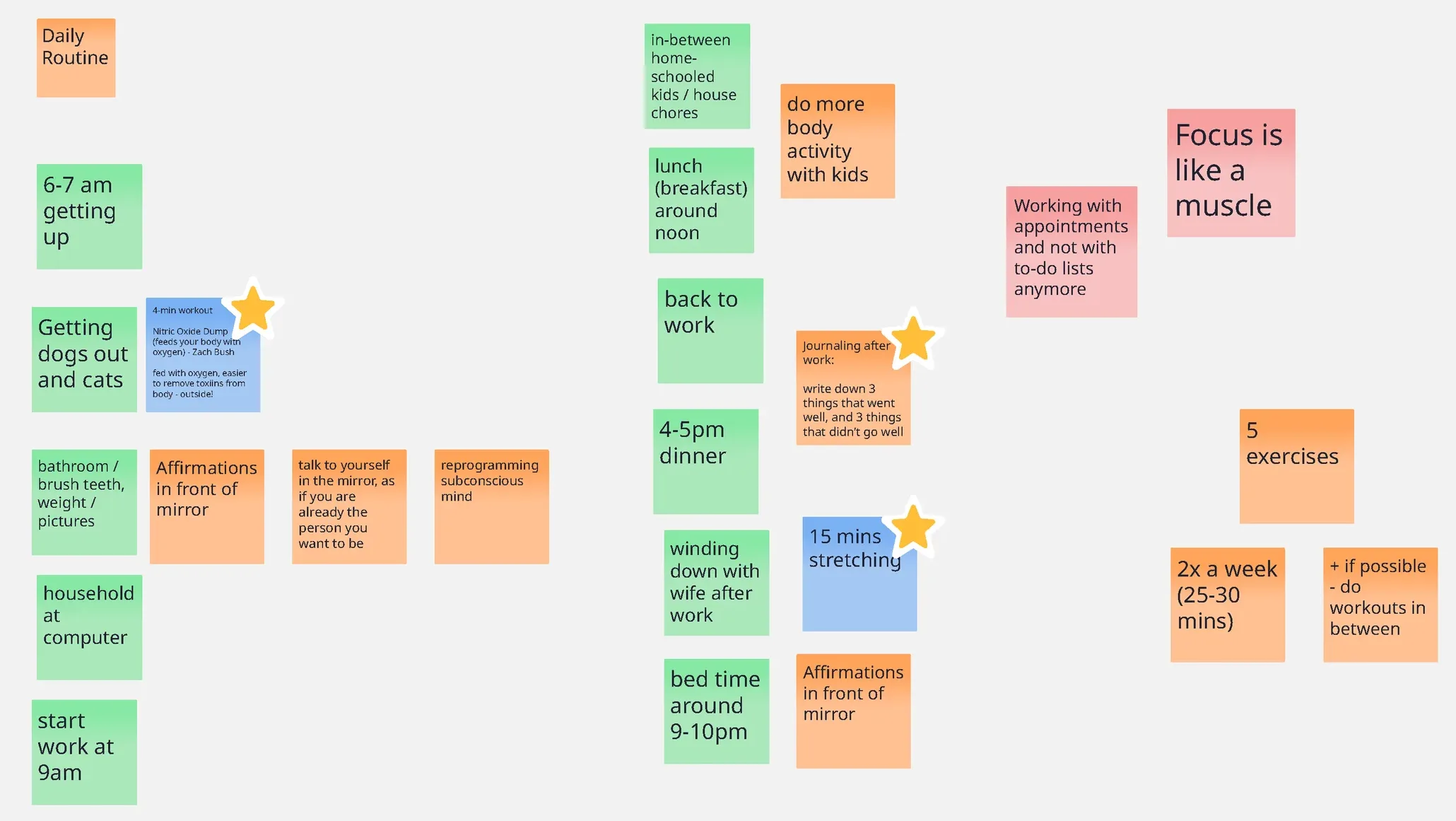
Nutrition and mental performance guidance alongside physical training – not a separate module, part of the same conversation.
What stays out
Supplements. Tracking apps that take longer to use than the workout. Any tool that adds friction without adding movement.
Read this carefully. It either fits or it doesn't.
I work with a specific kind of person. Not a demographic – a constraint profile. If the following describes you, we should talk.
"You've got more discipline at work in a single morning than most people use in a week. So why does the fitness thing keep not working? Because the program wasn't designed for someone like you."
- Executives, founders, or senior professionals whose schedule genuinely changes every week
- Frequent travelers who cannot commit to a fixed gym or fixed time slot
- Remote workers with chronic stiffness, joint pain, or long sedentary patterns from desk work
- People who have bought programs before, started, then stopped – not from lack of will, but because the programs weren't built for real life
- Anyone whose body is starting to cost them the energy and focus they need for their actual work
- People who want to be physically capable at 60, not a burden – and are willing to start now
Not a fit if
You're preparing for athletic competition, want gym-machine-based strength work, or need high-volume athlete programming. I'll tell you so on the call – no pitch, no wasted time.
Max – CEO, Germany. 41.
"Very, very little time for sports." Entrepreneur. Four kids. No fixed schedule, ever.
Starting point: could barely swim 25 meters. Eight months later: a 4.2km open-water lake crossing. The plan was built around an impossible schedule.
Michael – Senior Developer, Texas. 47. Remote.
"Decision fatigue is killing me." 240 lbs. Chronic joint pain. No movement routine for years.
Six weeks in: 15% squat mobility gain, pain scores falling, walking daily with his kids for the first time in years.
Client – Late 50s, Bavaria. In-person.
Training outdoors at an age when most coaches would put her in a gym.
Three months: better sleep, less anxiety, a stronger back, and lower baseline stress. No gym. No equipment beyond what nature provides.
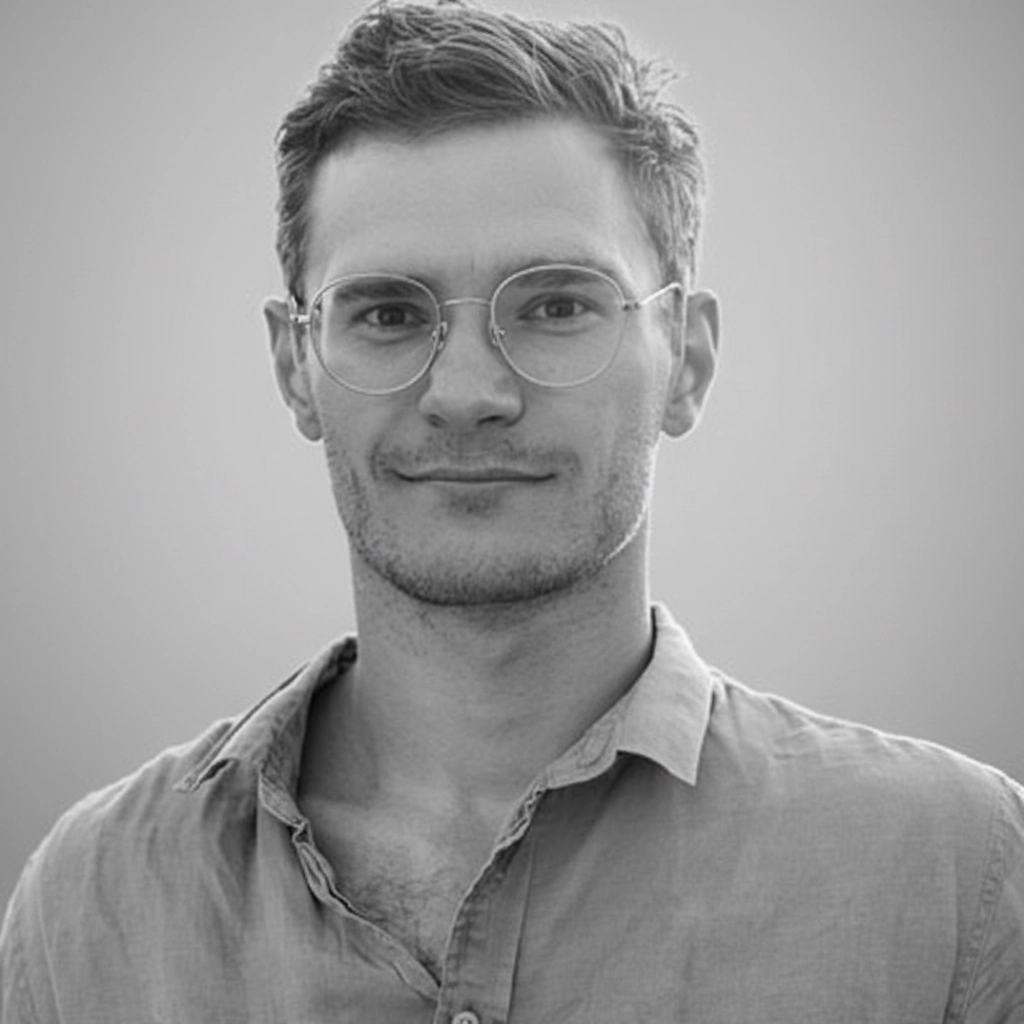
Nils Enders-Brenner
Hartei – Outdoor Fitness Coach
- –Fitnesstrainer-Lizenz B. A-Lizenz in progress.
- –M.Sc. Industrial Design. TU Munich. Studied in Bolzano, Novosibirsk, Stockholm.
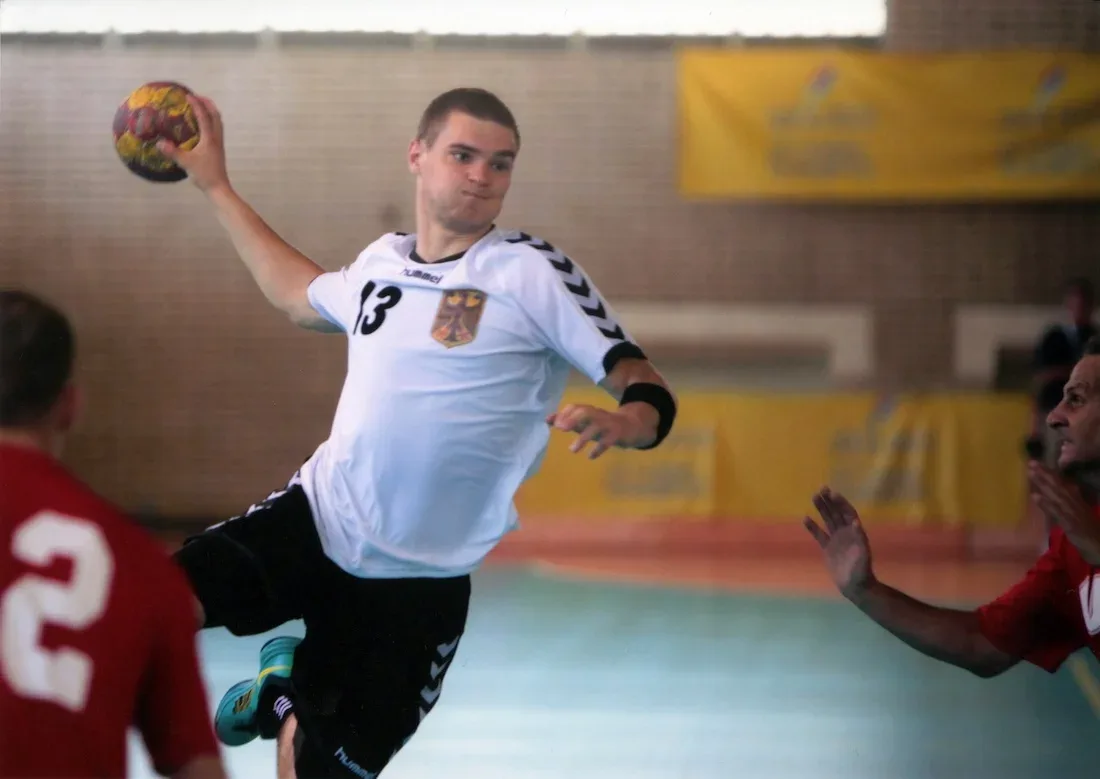
- –German Deaf National Handball Team. Youngest call-up at 17–18.
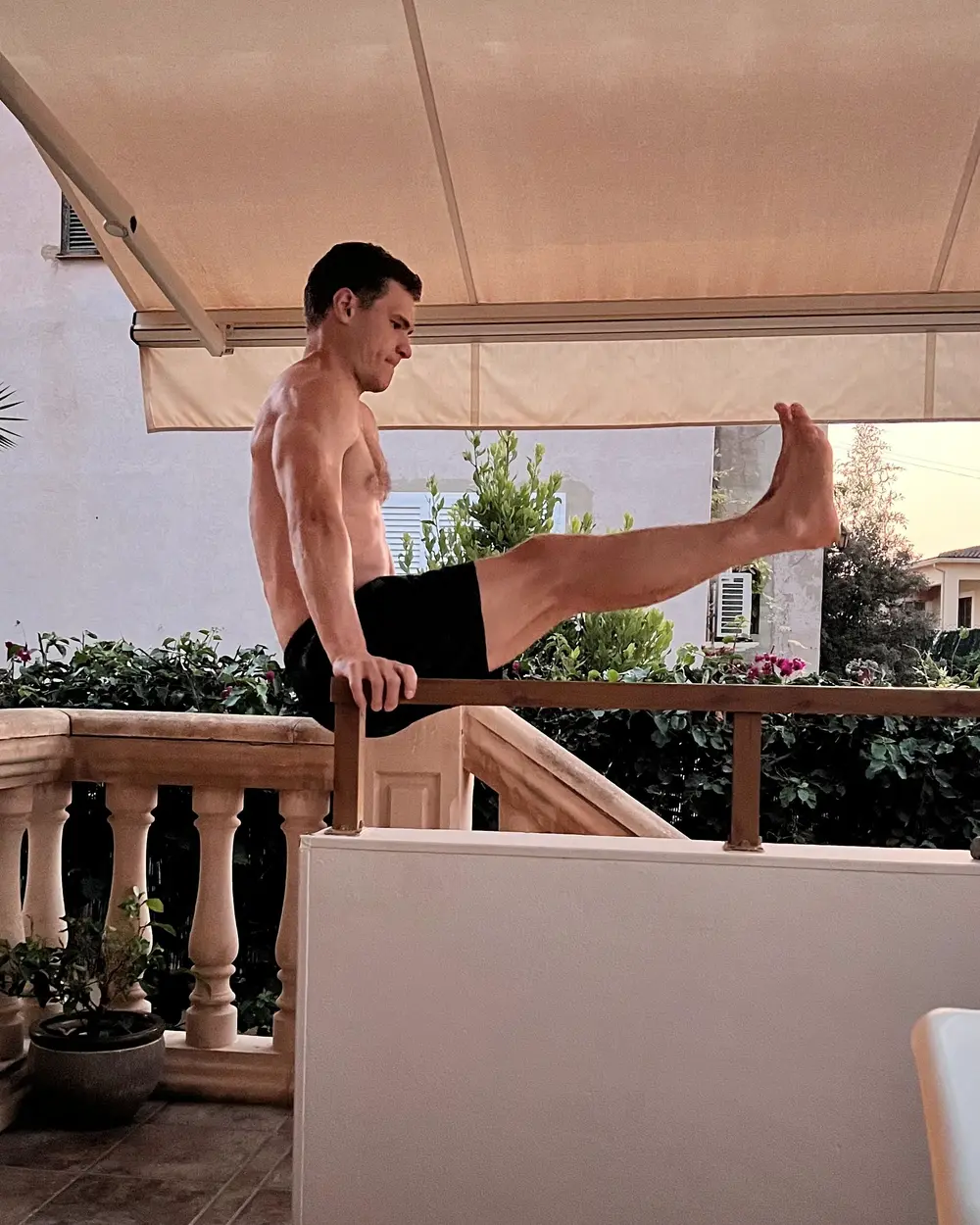
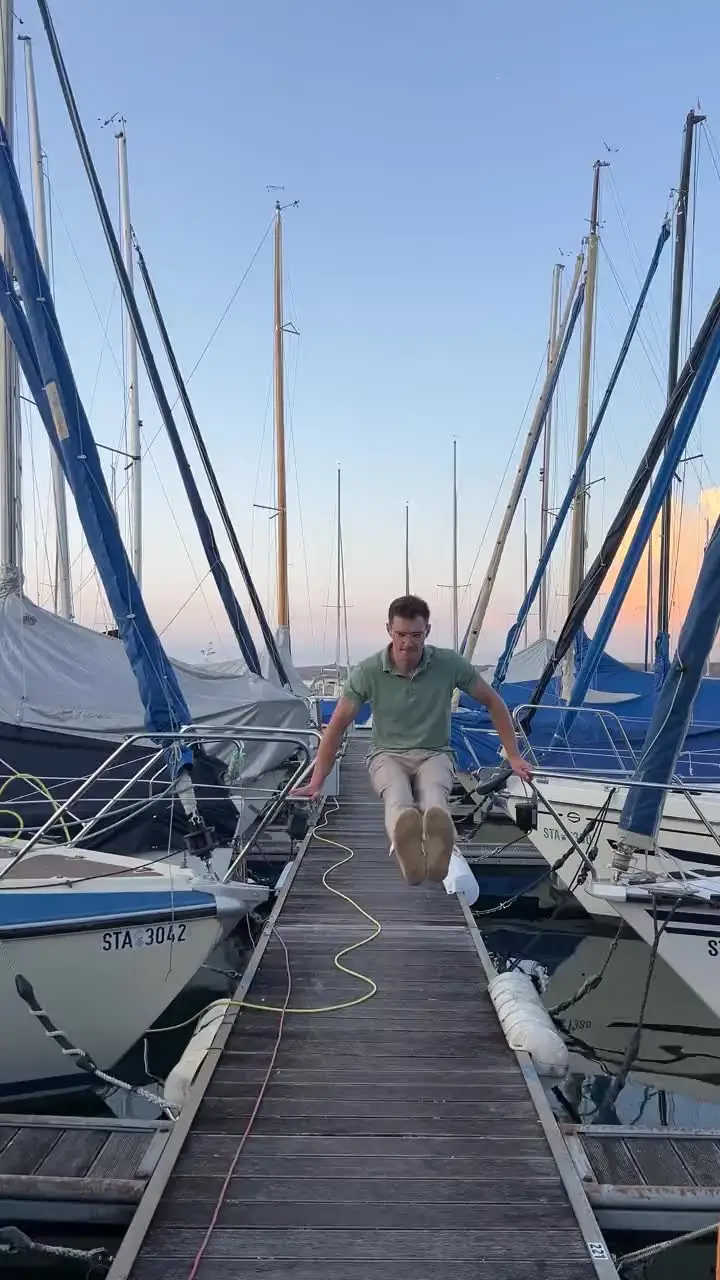
- –Current training: Calisthenics, open-water swimming, sprinting, Krav Maga. No gym machines.
- –Deaf since birth. Raised oral, in a hearing family.
- –Tutzing am Starnberger See. Wife and son.
I am deaf. I studied industrial design. Both taught me the same thing: design around how people actually behave, not how you wish they would.
I've watched bodies instead of listening to words for forty years. I grew up in a hearing family, raised oral – without sign language. Sport was the first place I could actually switch off and play with everyone else, because on a court or in a pool, language mattered less than what your body did. So I learned to read bodies – not by choice, but by necessity. That gives you a sensitivity most coaches never develop, because they never needed to.
"Being deaf meant I read every training partner's body for thirty years before I coached anyone. I could see where they held tension, where movement stopped being controlled, where the compensations were. A session with me tends to be quieter than most. It is also considerably more precise."
I played handball from local club level to the German Deaf National Team – youngest call-up at 17. I lipreaded through every training session and relearned at home what teammates absorbed by ear. Not as a hardship story. As a fact about how the constraint became the method.
I broke my leg during a handball match while finishing my master's thesis. That was the end of team sport. I came back through Old School Calisthenics – Paul Wade, Pavel Tsatsouline, J.P. Müller. Methods that predate the gym industry entirely. I took them outside. Forests, barefoot, all weather. And I got stronger than I had ever been indoors.
My other background is industrial design – M.Sc. from TU Munich, with time studying and working in Bolzano, Novosibirsk, and Stockholm. Industrial designers are trained to ask one question before all others: where does the system fail the person using it? Not the other way around.
Most fitness programs fail because they were designed for an imaginary user with a perfect schedule, a fixed location, and infinite discipline. A designer sees that immediately. The program needs to be redesigned. The person does not need to be fixed. The whiteboard, the short sessions, the location-independence: none of these are fitness insights. They are design decisions.
I trained in gyms when I was younger. I used gym machines during my Fitnesstrainer certification exams. I know exactly what they offer and what they cost – in location dependency, in scheduling compliance, and in the quiet belief they install that fitness requires their permission. I chose not to use them anyway. My clients cannot afford that dependency. So I built a method that doesn't ask for it.
Unedited. Unprompted.
Max – CEO, Germany, 41
Friend and training partner. Entrepreneur, 4 kids. 25m in January. 4.2km lake crossing in August.
"What's particularly important with Nils is that he listens. His special talent is not that he knows the exact techniques – he is a deep listener. He really wants to understand your pain points and how he can help, and then translates that into a tailored training plan. The result speaks for itself."
Client – Late 50s, Bavaria
Outdoor training. Three months. Strength, stretching, endurance.
"My overall health has improved considerably. I sleep better, have less anxiety, a noticeably stronger back, and go through daily life with less stress. Nils adjusts the training to my actual form on the day and gives exactly the right pressure and motivation. I can recommend this without reservation."
Michael – Senior Developer, Texas, USA
47. Chronic joint pain. Now walks daily with his kids.
"You're great at communicating and meeting me where I'm at. I feel better – more focused, more active with my kids. The momentum is building. The workouts don't feel like a big deal, but they clearly do stuff. That's the sweet spot I was looking for."
Three people. Three different starting points. One thing in common: they started with a 30-minute call.
The discovery call is free. You leave with something useful whether or not we work together.
No pitch. No obligation. 30 minutes.
From the first call to a program that runs without you thinking about it.
Four steps. No surprises. No commitment before you understand exactly what you're getting.
Discovery call – 30 minutes
You describe your schedule, your body, what you've already tried. I ask specific questions. We establish your actual starting point.
Zoom with live captions, transcript, and whiteboard. Free. No obligation.
Your program, built around your life
Within a week: a written plan in your hands. Built around the schedule you have, not the one you had in mind when you signed up.
Includes nutrition and mental performance guidance. No tracking app required.
Bi-weekly calls plus daily access
Two Zoom sessions per month – live captions, transcript, whiteboard. Between calls: WhatsApp or Signal, same-day replies.
Send workout videos. I review form and reply within the day.
The point where it stops feeling like effort
By month two or three, the sessions are no longer something you schedule. They are something you do, the way you make coffee.
"The workouts don't feel like a big deal – but clearly do stuff." – Michael, 6 weeks in.
The offer
Book 30 minutes.
Leave with one specific thing to change this week – whether or not we ever work together.
The best investment you can make is in yourself. Discipline is the bridge between goals and accomplishment – and discipline begins with a decision to begin. This call is that decision. It costs 30 minutes. The alternative costs compounding years.
This is not a sales call. It is a structured assessment. You describe where you are physically, what your schedule actually looks like, and what you've already tried. I tell you honestly what's blocking you and what a simple, survivable plan looks like for your specific situation.
You leave with a clear picture of your actual starting point and at least one specific thing to do this week. That stands regardless of whether we work together. The call is useful by design.
Most people who book this call have started and stopped something before. They arrive wondering if this time is different. That question gets answered in the first ten minutes — not by the coach, by the conversation.
This call works in both directions. You are deciding whether I am the right coach for your situation. I am deciding whether your situation is one I can genuinely help with. If the answer is no on either side, the call was still worth having.
The person who books this call has made a decision most people around them haven't made yet. Not a commitment to a program. A decision about what kind of person they are going to be. Rohn said it plainly: "It is not what happens in life that determines how far you go – it is what you do about it." Thirty minutes is what you do about it.
Free 30-minute discovery call – Zoom with whiteboard
No obligationThe guarantee: you leave with something concrete – a clear picture of what's holding you back and one specific action to take this week, identified for your situation. If the call doesn't deliver that, it was not worth your time, and I will say so.
- ~10 min. An honest assessment of where you actually are – not where you think you are
- ~8 min. A clear look at the one or two things that have been stopping you – named specifically
- ~8 min. A sketch of what a plan looks like for your specific schedule and body
- Always. Whiteboard – shared visual record of everything we agreed, zero ambiguity
- Honest. A straight answer on whether this is a fit – and if not, what would actually serve you
Select a slot that fits your schedule. You'll receive a confirmation immediately with the Zoom link and everything you need. Email nils@hartei.com if you run into problems.
I take on a small number of clients at a time because 1-on-1 coaching at this level demands real attention. The discovery call tells us both whether the fit is right and whether the timing works.
Ongoing 1-on-1 coaching
From €700/month
6-month engagement. Bi-weekly Zoom calls, daily messaging, full tailored plan with nutrition and mindset guidance.
Market context
€200–500/month
Typical executive personal training in Germany. This is above that – 1-on-1 and location-independent.
The complete system – bodyweight progressions, nutrition principles, daily habits, and the mental approach" – Field Guide
Not ready for 1-on-1 coaching yet? Start here. For €27.
The complete Hartei method in written form. The principles work. The coaching is for people who want them implemented around their specific life, body, and schedule – not figured out alone.
It costs €27 because it contains twelve years of training without a gym, without machines, and against the advice of every mainstream source – condensed into the sequence that took me those years to discover. If you later start 1-on-1 coaching, the €27 comes off your first month. No conditions.
After reading this, you'll know exactly what to do, why it works, and how to keep doing it when life gets busy – without a gym, a trainer, or a plan that collapses the moment your schedule does.
What's inside
- – The outdoor method – how to train in any environment, with nothing
- – The full bodyweight progression system – from incline push-up to one-arm, structured as a readable roadmap
- – Why stress, distraction, and decision fatigue destroy more programs than lack of fitness
- – Nutrition principles for people with no interest in tracking macros or counting calories
- – The 4-minute morning protocol – the single daily habit that changes the baseline
You already know what you should be doing. What you have never had is a system that survives the version of your life that actually shows up on a Wednesday.
That is what this is.
Reserved. You'll hear from me when it's ready – before anyone else.
The questions people ask before they book.
These are not marketing FAQs. They are the actual questions that come up on discovery calls, in WhatsApp messages, and in people's heads when they look at this page and wonder if it's for them.
-
Ongoing 1-on-1 coaching starts from €700 per month on a 6-month engagement. That includes bi-weekly Zoom calls with live captions, full session transcript, and shared whiteboard – daily messaging via WhatsApp or Signal, video form feedback, and a full personalised program with nutrition and mindset guidance. The discovery call is free and has no obligation attached. The Field Guide ebook is €27 separately – and if you later start coaching, the €27 comes off your first month. The market average for executive personal training in Germany is €200–500 per month. This is above that, because it is location-independent, 1-on-1, and built around your actual schedule.
-
On Zoom I use Zoom's live captions and session transcript – so every word spoken in the call is captured in real time, nothing gets missed or approximated. Combined with the shared whiteboard, you leave every session with two complete written records. When I work with someone in person – local clients – I lipread and wear hearing aids. The deafness is not a limitation being worked around. It produced a system more rigorous than what most coaches offer by default.
-
Yes. The entire program runs online – Zoom for sessions, WhatsApp or Signal between them. I currently work with clients in Germany, the United States, and other time zones. Location is irrelevant to the method: a program built around bodyweight and outdoor movement has no address requirements.
-
Because the reason most people stop has nothing to do with discipline. It's because the program was built for a different life – fixed location, fixed schedule, fixed intensity, none of which survive the real pressures of an executive's week. This program is built around the schedule you actually have. The plan adapts when your week does. That is not a feature. It is the whole design principle.
-
The program requires your body and a floor space. No gym, no machines, no equipment to pack. A hotel room works. A park near the office works. Location is not a variable in this method. That was a deliberate decision, not an accident.
-
Most clients arrive with joint pain, stiffness, or chronic discomfort from years of sedentary work. The program starts conservative, builds gradually, and adapts to what your body can do today. I am not a physiotherapist and I will tell you directly if something requires medical assessment first. Controlled, progressive bodyweight movement adapted to your specific condition tends to reduce chronic pain over time rather than aggravate it.
-
A YouTube program cannot see you. It cannot see your compensations, your posture, the way your movement changes under fatigue. It cannot adjust when your week collapses. The whiteboard sessions, form video feedback, and daily messaging channel exist because the answers to those questions are where results actually live.
-
Equipment is welcome when it doesn't create location dependency. Kettlebells, gymnastic rings, a medicine ball, a wooden stick – all usable. What we don't use is a gym machine, because it ties you to a building. The goal is a body that performs anywhere. Anything that supports that is on the table.